


Breaking the Norm of Adult Hockey Since 2006
StinkySocks Hockey continues to grow at a rapid pace with options to fit every adult player’s need.

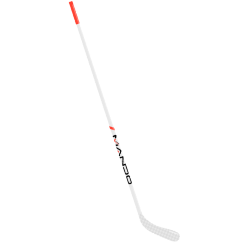
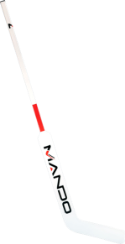
Manufactured exclusively by Mando Hockey with the highest quality materials and attention to detail, these are designed to not only look good but to last.

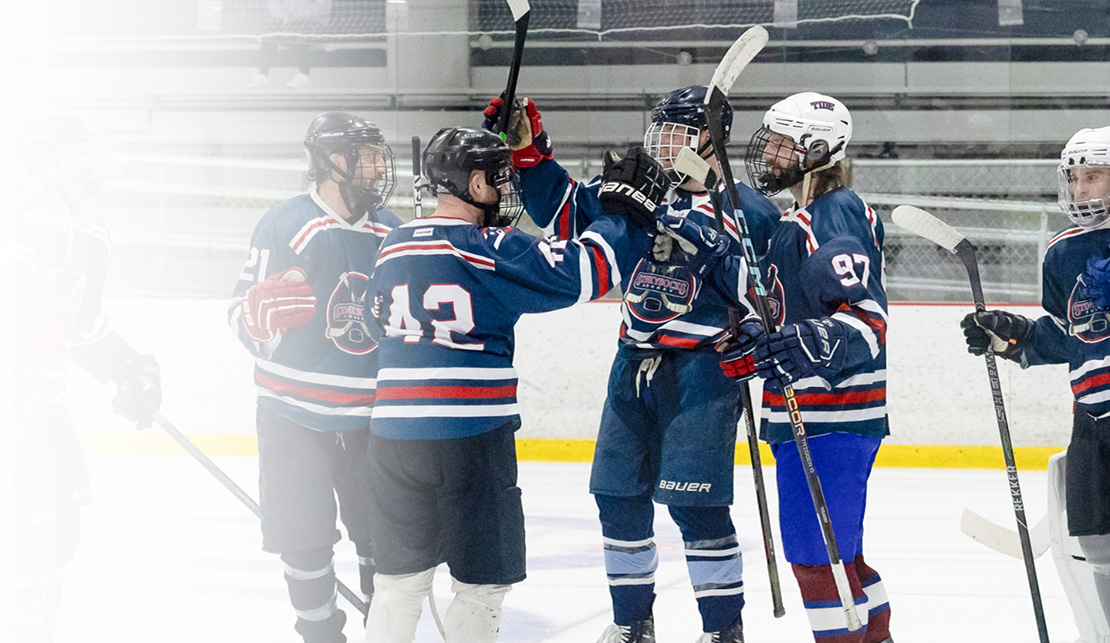



Select between playing individual and as a team and we’ll show you the best options available.

No Commitment Hockey is our traditional format, designed for individual and small group registration. Each game is essentially a very well organized pickup game that features a referee for structure. As with all of our games, you’ll be playing with others of your ability level and benefit from our signature policy of “no jerks”.
The goal of each No Commitment Hockey game is to get you an awesome workout playing the game you love. Games are limited to 20 skaters and two goalies to maximize the amount of time that you’re on the ice. The league office handles everything to ensure that you’re getting a consistently good experience on a predictable schedule.


Goalies Play For Free
No Commitment Hockey is our traditional format, designed for individual and small group registration. Each game is essentially a very well organized pickup game that features a referee for structure. As with all of our games, you’ll be playing with others of your ability level and benefit from our signature policy of “no jerks”.
The goal of each No Commitment Hockey game is to get you an awesome workout playing the game you love. Games are limited to 20 skaters and two goalies to maximize the amount of time that you’re on the ice. The league office handles everything to ensure that you’re getting a consistently good experience on a predictable schedule.
The Novice level is designed for players in the early stages of their adult hockey journey—typically within their first five years of organized play. It also suits those who may have been playing longer as adults but never played hockey prior to adulthood. Additionally, it’s an ideal entry point for individuals returning to the sport after having only played in childhood.
A Level 1 player is generally new to organized hockey and skating in a team environment for the first time. Most players progress quickly out of level 1. Level 2 players often have some childhood experience but did not play in high school and have been away from the game since their organized experience. Level 3 players usually have at least two years of adult hockey experience under their belt. Across all levels within this novice category, players are typically developing fundamental skills in two to four key areas: shooting, passing, skating, and body control.
This level is intended for Level 1-3 players. While it’s open to that range, leagues such as draft leagues, BYOT, and tournaments often trend toward the upper end of that spectrum due to cohesion and teams rostering the most competitive players eligible within this range.
The Lower Intermediate level is designed specifically for adults who began playing hockey as adults. Players at this level are typically still working on developing at least one of the core hockey skills, such as shooting, passing, skating, or body control. Players with any organized men’s high school-level hockey experience, or whose current playing ability is equivalent to that background, are NOT eligible at this level. However, exceptions may apply, such as in cases where a player has high school experience but has been away from the sport for 20+ years.
This level is intended for Level 3 and 4 players. While it’s open to that range, leagues such as draft leagues, BYOT, and tournaments often trend toward the upper end of that spectrum due to cohesion and teams rostering the most competitive players eligible within this range.
The Intermediate level is for players who have men’s high school-level hockey experience or possess a comparable current skill level, whether due to their youth, athleticism, or adult playing background. Players who have participated in organized hockey beyond high school—such as juniors, college club, or prep—NOT eligible, unless they have been away from the game for 15 years+ or have other mitigating life circumstances.
This level typically includes Level 4, 5, and 6 players; Level 5 players are most often in their 30s with high school experience, while Level 4 players are older and Level 6 players tend to be younger. Participants at this level are able to make good passes, shoot effectively, maintain solid puck and body control, and demonstrate overall reliable hockey skills. Although the Intermediate level covers the full 4–6 range, leagues like draft leagues, BYOT, and tournaments often attract players from the higher end of this spectrum, as teams look to roster the most competitive eligible players available.
Players at the Upper Intermediate level can move the puck well, make solid passes, shoot accurately, have a good hockey sense, and are comfortable with a fast-moving game. It is usually the best fit for younger players who have had solid high school experience, as well as any player who has played juniors, prep, or college club. Players who have participated in organized hockey at the men’s college divisional level, or possess a comparable current skill level, are NOT eligible, unless they have been away from the game for 10 years+ or have other mitigating life circumstances.
This level is intended for Level 6 and 7 players. While it’s open to that range, leagues such as draft leagues, BYOT, and tournaments often trend toward the upper end of that spectrum due to cohesion and teams rostering the most competitive players eligible within this range.
The Advanced level includes players with solid experience beyond men’s high school hockey, those with collegiate-level backgrounds, or anyone with equivalent playing ability. While typically excluding former D1 college players, exceptions may be made for factors like age, time away from the game, or other personal circumstances.
Players in this range are generally classified as follows: a Level 8 player is usually in their 30s with college-level experience; Level 7 skews older and perhaps less active; while Level 9 includes younger, faster players at the higher end of the advanced skill spectrum. This is a high-tempo level designed strictly for advanced players.
This level is intended for Level 7-9 players. While it’s open to that range, leagues such as draft leagues, BYOT, and tournaments often trend toward the upper end of that spectrum due to cohesion and teams rostering the most competitive players eligible within this range.
Players at this level have typically played D1 college hockey and may have had professional hockey experience. Players at this level MUST have at least high level collegiate experience. If they have college experience other than D1, they typically have consistently played hockey since college and are still under the age of 30.
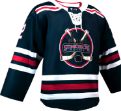
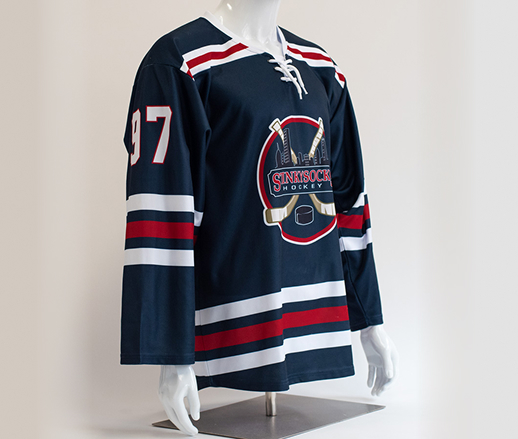
All skaters must own and wear a StinkySocks Hockey jersey registered to them in order to be eligible to participate in any No Commitment Hockey® game.
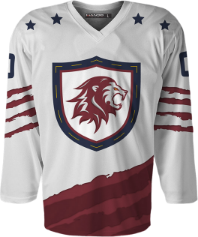
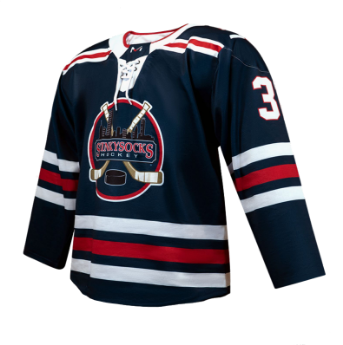
StinkySocks Hockey jerseys are designed by Mando Hockey with the intent for them to be the only jerseys that you’ll ever need in your hockey bag. With a unique identification number on each, they are a primary source of player identification and enable contactless attendance at our games.
Don’t know where to start? Use our online tool to find the right level location and game types for you.
Final payments are charged automatically to the same form of payment as your deposit and at the discounted rate, four weeks prior to the tournament. Those wishing to make their final payment manually can do so by contacting the league office before the deadline (two weeks prior to the tournament).
Jersey colors are requested at the time of registration. In the case of a jersey color conflicts within your team’s division, whoever requested the color first, usually by registering first, will be given preference.
Unfortunately not. Level is one of the founding values at StinkySocks Hockey so all players must qualify to play at the level that their team is entering.
It’s up to each team who they want to register. Even if you think that your primary goalie can make any and all games of the tournament we recommend having a backup registered due to any unpredictable circumstance. In the event that your goalie can’t play in a game, you will not be able to place your own goalie who is not rostered. The league will do everything possible to place a goalie who qualifies for the level you but that cannot be guaranteed.
Captains do not submit rosters. Approximately 2 weeks prior to the tournament and after your team is paid in full we’ll provide you with access to a portal where you'll find a unique player registration link to distribute to your players. Each player can then register using that link prior to the player registration deadline stated on your team's page and the tournament in general. The on time deadline is generally 4 days prior to the tournament start date. Late registration is allowed with a fee through the first day of the tournament at the time stated on your team's page and the tournament in general.
We will provide the schedule approximately 2 weeks prior to the tournament. Even after that point it is possible that the schedule can change so players should be aware that games can take place at any time within the range given for each day.
If your roster exceeds the player allowance when player registration closes we’ll reach out to ask you who should be removed or, in the case you’d like to keep everyone, we’ll permission to charge the card on file for those exceeding the limit.
We have a system of checks and balances to ensure equitable leveling. If at any point in the first two rounds of the tournament you team feels that a player on another team does not qualify for the level then you, as the captain of any team in the same division regardless of whether or not you’ve played or observed the other team, can issue a formal level challenge by alerting the onsite staff of your wish to due so. That starts the process and we’ll make a determination of eligibility based on our staff’s prior observations.