




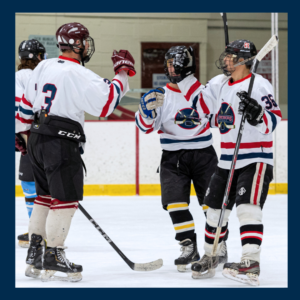
No ex-collegiate players in the novice games, no intermediate teams in the advanced league; it’s just one of the many things that make us different from other leagues.

This principle value is part of what we do to put you, the player, first. Welcome to hockey, redefined.

We work hard to ensure that StinkySocks Hockey games include players of the same skill levels. Although we have safeguards in place to monitor the skill levels of players, we rely on players to register for leagues and games at their appropriate skill levels. If we find this not to be the case, we will address this with the player and move them into the league or skate most appropriate for their skill level, ensuring the StinkySocks Hockey experience remains a great one for the rest of the players. We group players strictly based on their skill levels and not age nor sex.

We’ve created a guide to help you determine which skill level is most appropriate for you. We realize that this can sometimes be a moving target, but hope that these general guidelines assist you in landing in the right game from the start. Regardless of where you land, you can always expect find a welcoming environment.

Our Skill Levels

Mixed Open (All Levels)

This is a broad range, mixed level, offered so that players of any ability level have the opportunity to skate together when they normally their levels would not overlap.

Goalie Clinic (All Levels Welcome)

The low player to coach ratios of our goalie clinics provide a customized experience that’s appropriate for all skill levels.

Novice (Levels 1-3)

The Novice level is designed for players in the early stages of their adult hockey journey—typically within their first five years of organized play. It also suits those who may have been playing longer as adults but never played hockey prior to adulthood. Additionally, it’s an ideal entry point for individuals returning to the sport after having only played in childhood.
A Level 1 player is generally new to organized hockey and skating in a team environment for the first time. Most players progress quickly out of level 1. Level 2 players often have some childhood experience but did not play in high school and have been away from the game since their organized experience. Level 3 players usually have at least two years of adult hockey experience under their belt. Across all levels within this novice category, players are typically developing fundamental skills in two to four key areas: shooting, passing, skating, and body control.

This level is intended for Level 1-3 players. While it’s open to that range, leagues such as draft leagues, BYOT, and tournaments often trend toward the upper end of that spectrum due to cohesion and teams rostering the most competitive players eligible within this range.

Women’s Novice (Levels 1-3)

The Women’s Novice level is designed for women in the early stages of their adult hockey journey—typically within their first five years of organized play. It also suits those who may have been playing longer as adults but never played hockey prior to adulthood. Additionally, it’s an ideal entry point for individuals returning to the sport after having only played in childhood.
A Level 1 player is generally new to organized hockey and skating in a team environment for the first time. Most players progress quickly our of level 1. Level 2 players often have some childhood experience but did not play in high school and have been away from the game since their organized experience. Level 3 players usually have at least two years of adult hockey experience under their belt. Across all levels within this novice category, players are typically developing fundamental skills in two to four key areas: shooting, passing, skating, and body control.

This level is intended for Level 1-3 players. While it’s open to that range, leagues such as draft leagues, BYOT, and tournaments often trend toward the upper end of that spectrum due to cohesion and teams rostering the most competitive players eligible within this range.

Skills Clinic (Levels 1-4)

The skills level is an instructional level geared to helping hockey players develop the fundamentals of the game. It is intended for players getting back into the game or just learning to play hockey. The skills level is also great for players at the novice and lower intermediate levels looking to move to the next skill level. Our low player to instructor ratio allows us to customize the instructional programming to each participant’s needs.

Women’s Lower (Levels 1-4)

The Women’s Lower Level encompasses Levels 1 through 4, covering the full Novice category and extending into the Lower Intermediate range. This level generally excludes players with high school, college, or comparable competitive experience. Level 1 players are new to organized hockey and skating in a team environment, focusing on foundational skills such as skating, stopping, stick handling, and basic positioning. Most progress quickly as confidence and control improve. Level 2 players may have limited childhood experience but did not play in high school; they are becoming more comfortable with game flow and developing consistency in core skills like skating, passing, and shooting. Level 3 players typically have at least two years of adult hockey experience and demonstrate stronger skating and puck control, along with increased awareness of positioning and team play. Level 4 players have moved beyond the beginner stages and are ready for slightly faster-paced, more competitive play, showing growing confidence in game situations, stronger decision-making, and improved overall coordination.

Across all four levels, players continue to refine their skating, shooting, passing, body control, and overall game sense in at least one of the four key areas.

Mixed Lower (Levels 2-4)

This is a broad range, mixed level, offered so that players of slightly different ability levels have the opportunity to skate together when they normally their levels would not overlap.

A Novice (2-3) player is in the early stages of their adult hockey journey—typically within their first five years of organized play. This level also suits those who may have been playing hockey for longer as adults but never played before adulthood, or individuals returning to the sport after having only played in childhood. The commonality across all levels within the novice category is that players are typically developing fundamental skills in two to four key areas: shooting, passing, skating, and body control. Players at the Lower Intermediate (3-4) level are typically still working on developing at least one of those.

Players with any organized men’s high school-level hockey experience, or whose current playing ability is equivalent to that background, are NOT eligible at this level. However, exceptions may apply, such as in cases where a player has high school experience but has been away from the sport for 20+ years. It is also not an appropriate level range for beginners (level 1).

This level is intended for Level 2 through 4 players. While it’s open to that range, leagues such as draft leagues, BYOT, and tournaments often trend toward the upper end of that spectrum due to cohesion and teams rostering the most competitive players eligible within this range.

Lower Intermediate (Levels 3-4)

The Lower Intermediate level is designed specifically for adults who began playing hockey as adults. Players at this level are typically still working on developing at least one of the core hockey skills, such as shooting, passing, skating, or body control. Players with any organized men’s high school-level hockey experience, or whose current playing ability is equivalent to that background, are NOT eligible at this level. However, exceptions may apply, such as in cases where a player has high school experience but has been away from the sport for 20+ years.

This level is intended for Level 3 and 4 players. While it’s open to that range, leagues such as draft leagues, BYOT, and tournaments often trend toward the upper end of that spectrum due to cohesion and teams rostering the most competitive players eligible within this range.

Mixed Mid (Levels 3-6)

This is a broad range, mixed level, offered so that players of slightly different ability levels have the opportunity to skate together when they normally their levels would not overlap.

A Lower Intermediate (3-4) player typically began playing hockey as an adult. Players at this level are usually working on developing at least one of the core hockey skills, such as shooting, passing, skating, or body control. An Intermediate (4-6) player usually has men’s high school-level hockey experience or possesses a comparable current skill level, whether due to their youth, athleticism, or adult playing background. Intermediate players are able to make good passes, shoot effectively, maintain solid puck and body control, and demonstrate overall reliable hockey skills.

Players who have participated in organized hockey beyond high school—such as juniors, college club, or prep—NOT eligible, unless they have been away from the game for 15 years+ or have other mitigating life circumstances.

This level typically includes Level 3 through 6 players but leagues like draft leagues, BYOT, and tournaments often attract players from the higher end of this spectrum, as teams look to roster the most competitive eligible players available.

Intermediate (Levels 4-6)

The Intermediate level is for players who have men’s high school-level hockey experience or possess a comparable current skill level, whether due to their youth, athleticism, or adult playing background. Players who have participated in organized hockey beyond high school—such as juniors, college club, or prep—NOT eligible, unless they have been away from the game for 15 years+ or have other mitigating life circumstances.

This level typically includes Level 4, 5, and 6 players; Level 5 players are most often in their 30s with high school experience, while Level 4 players are older and Level 6 players tend to be younger. Participants at this level are able to make good passes, shoot effectively, maintain solid puck and body control, and demonstrate overall reliable hockey skills. Although the Intermediate level covers the full 4–6 range, leagues like draft leagues, BYOT, and tournaments often attract players from the higher end of this spectrum, as teams look to roster the most competitive eligible players available.

Shooting Practice (Levels 4+)

Shooters for goalie clinics must be at at least the intermediate level. Players at this skill level typically have played high school hockey, or embody the equivalent experience due to age, athleticism, or thorough experience as an adult. Players at this level make good passes, shoot reasonably well, have solid puck control, and maintain good body control.

Upper Intermediate (Levels 6-7)

Players at the Upper Intermediate level can move the puck well, make solid passes, shoot accurately, have a good hockey sense, and are comfortable with a fast-moving game. It is usually the best fit for younger players who have had solid high school experience, as well as any player who has played juniors, prep, or college club. Players who have participated in organized hockey at the men’s college divisional level, or possess a comparable current skill level, are NOT eligible, unless they have been away from the game for 10 years+ or have other mitigating life circumstances.

This level is intended for Level 6 and 7 players. While it’s open to that range, leagues such as draft leagues, BYOT, and tournaments often trend toward the upper end of that spectrum due to cohesion and teams rostering the most competitive players eligible within this range.

Mixed Upper (Levels 6-9)

This is a broad range, mixed level, offered so that players of slightly different ability levels have the opportunity to skate together when they normally their levels would not overlap.

Players at the Upper Intermediate level (6-7) can move the puck well, make solid passes, shoot accurately, have a good hockey sense, and are comfortable with a fast-moving game. It is usually the best fit for younger players who have had solid high school experience, as well as any player who has played juniors, prep, or college club. The Advanced level (7-9) includes players with solid experience beyond men’s high school hockey, those with collegiate-level backgrounds, or anyone with equivalent playing ability.

While typically excluding former D1 college players, exceptions may be made for factors like age, time away from the game, or other personal circumstances. This level is intended for Level 7-9 players. While it’s open to that range, leagues such as draft leagues, BYOT, and tournaments often trend toward the upper end of that spectrum due to cohesion and teams rostering the most competitive players eligible within this range.

Advanced (Levels 7-9)

The Advanced level includes players with solid experience beyond men’s high school hockey, those with collegiate-level backgrounds, or anyone with equivalent playing ability. While typically excluding former D1 college players, exceptions may be made for factors like age, time away from the game, or other personal circumstances.

Players in this range are generally classified as follows: a Level 8 player is usually in their 30s with college-level experience; Level 7 skews older and perhaps less active; while Level 9 includes younger, faster players at the higher end of the advanced skill spectrum. This is a high-tempo level designed strictly for advanced players.
This level is intended for Level 7-9 players. While it’s open to that range, leagues such as draft leagues, BYOT, and tournaments often trend toward the upper end of that spectrum due to cohesion and teams rostering the most competitive players eligible within this range.

Skill Level Policy

We work hard to monitor and enforce the level expectations that our players have. That all begins with the honesty of players in selecting games and leagues that are appropriate to their skill level. Please check out our Rules and Policies for more details on our Appropriate Skill Level Policy and what to do if you find yourself in a game that is not of the right level.

If you are still not sure what skill level you should play, feel free to contact us online or call us at 617-440-PUCK talk through what the best fit will be based on your experience, age, and other factors.

For those looking for the ultimate combination of both schedule flexibility and game consistency, No Commitment Hockey allows you to book games or skills clinics that have availability whenever you’d like. Get on the ice seven nights a week or once a year, the frequency is up to you.