







Tournament – Rules and Terms
Player Eligibility
To be eligible to participate in any tournament game, a player must:
- Be 21 years of age or older.
- Individually qualify for the level that their team has entered.
- Register on their team’s roster by the deadline and, in that process, have e-signed a StinkySocks Hockey waiver.
- Have a valid ID available at check-in.
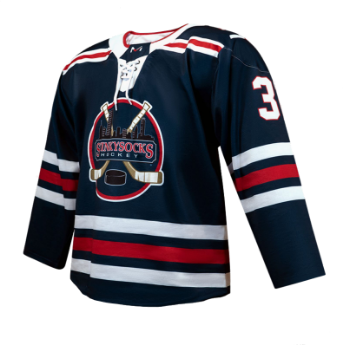
- Have a team matching jersey that is uniquely numbered and use that same jersey/number for the entirety of the tournament.
- Be certified by the captain on their game roster for each game played.
- To be eligible for any semi-final or final game, the player must have played in at least one of the round 1-3 games.
- Be otherwise eligible to participate in a StinkySocks Hockey event. A player cannot be on a conduct hold, admin hold, or have been previously released from eligibility.
Rules of the Game
NCAA ice hockey rules will be enforced, with the following modifications, unless otherwise noted for a particular tournament.
General Modifications
- No checking
- Zero tolerance on fighting: any involvement in a fight on or off the ice will result in a lifetime ban from any and all StinkySocks hockey games, tournaments, leagues, etc.
- Blue line automatic icing will be enforced.
- Time (Rounds 1-3) – (3) 15-minute periods – last (1) minutes of the 3rd period (or overtime) stopped time if score is within 1 goal, (1) minute between periods and (3) minutes to warm up. Games can result in a tie.
- Time (Semi-Finals and Finals) – (3) 15-minute periods, last (2) minutes of the 3rd period (or overtime) stopped time, (1) minute between periods and (3) minutes to warm up. In the event of a tie in regulation, overtime periods of 5 minutes in length will repeat until there is a winner. Overtime is played as 4v4.
- Officiating – (2) Referees per game
- Timeouts – None, except final game, where each team will be given (1) one-minute timeout at any point in the game.
- Penalties – Any player who has 3 minor penalties in a game will be ejected from that game. Any such disqualification will count towards the Three Strike Rule for team disqualification. A subsequent conduct issue on or off ice while exiting that game (e.g. unsportsmanlike conduct) will result in an additional game disqualification. A major penalty will result in player ejection from the game and disqualification from the tournament.
- Teams must have matching color jerseys.
- Players must be on bench before the end of the first period for any game to play in that game.
- Players must participate in one game during rounds 1-3 to be eligible to play in a semi-final or final game.
Roster Allowance Modification
- Tournament teams are limited to (17) total players. Tournament pricing includes 14 rostered players.
Finals Determination
- Overall record in each division (2 points for a win, 1 point for a tie)
- per period (2 points for a win, 1 point for a tie)
- per game (1 point for a win, 0 for a tie or loss)
- Tiebreakers (in order of value):
- 1) Fewest penalty minutes
- 2) Fewest goals against
- 3) Most goals for
- 4) Coin toss
Format
- All StinkySocks Hockey tournaments are a round robin format for levels that have 4 teams. All others have a schedule against 3 randomly assigned teams.
- Each level/divison will have the top 2 teams go to the final game.
Team Three Strike Rule
A team that incurs 3 player disqualifications (individual game or tournament) will be disqualified as a team. Generally, player disqualifications come in the following forms:
- Excessive Minor Penalties – A player is disqualified from a game if they are assessed (3) minor penalties in one game.
- Major Penalty – A player is disqualified from the tournament if they are assessed a major penalty.
- General Conduct – A player is given an administrative warning if improper physical or verbal conduct is observed. Upon a subsequent conduct-related issue, that same player would be disqualified from the tournament. Refer the conduct (“No Jerks”) policy.
- Level Challenge – If the level eligibility of a player is challenged by another team and that is upheld then then player will be disqualified from the tournament. Refer to the “Administrative Level Appeals” section below.
Unless otherwise determined by the tournament staff, a team that is disqualified can finish out all of their remaining games. However, any of their players who had been flagged for level (regardless of whether or not they had been challenged) will not be eligible to play and all players will be considered to have a conduct warning.
Levels and Specific Disqualifiers
All players on a team must individually qualify for the level at which their team has entered. The league does not screen players in advance, as there's an expectation that captains build their teams in a manner that's fair and based in part on the following guidelines:
Novice– This level is geared to those who have only played the game as adults and have not mastered all of the fundamentals. To qualify, players should have experience playing at the novice level in StinkySocks Hockey Standard Format Games, but not above, to play at this level in our tournaments.
Lower Intermediate – This level is a good fit for those who started playing as adults or picked the game up again as an adult. High school playing experience or above is specifically a disqualifier at this level.
Intermediate – This level is a good fit for those who have high school playing experience but no collegiate experience. Any experience above the high school level, e.g. college club or NCAA, is specifically a disqualifier at this level.
Upper Intermediate – This level is a good fit for those who have recent high school playing experience or college club experience but no collegiate divisional experience. Any experience above the college club level, e.g. NCAA, is specifically a disqualifier at this level.
Advanced – Advanced level players range from those who are younger with solid high school hockey and club hockey experience through those with collegiate experience, or the equivalent. D1 collegiate experience or above is a specific disqualifier at this level.
Please keep in mind that the above are guidelines only are based upon a player in his/her 30’s. Age, athleticism, and other factors may affect level categorization. Both common sense and a sense of equity should prevail when rostering players.
Administrative Level Appeals
Tournament staff does not unilaterally disqualify players unless we have verifiable information regarding one of the specified disqualifiers having been met. Instead, a system of checks and balances are in place to ensure fairness in the process. One of the most important parts of ensuring fair leveling is having captains of other teams in the same division assessing the appropriateness of ability level of players of other teams and participating in the level appeal process.
Tournament staff members privately flag players that they feel may be above the stated level but no action is taken unless a team captain raises an administrative appeal that matches those observations.
A captain at any point IN THE FIRST TWO ROUNDS of the tournament may ask for an administrative decision of the level eligibility of a player from an opposing team. The tournament administrative staff will gather data from their prior observations and issue a final decision as to whether the player in question is eligible for the division in which their team is competing.
If a player is disqualified during this process, they cannot be replaced by another player. All goals scored by or assisted by that player in games played will be removed.
To prevent abuse of level appeals, any team that makes two appeals that are denied will lose one point from their own point total.